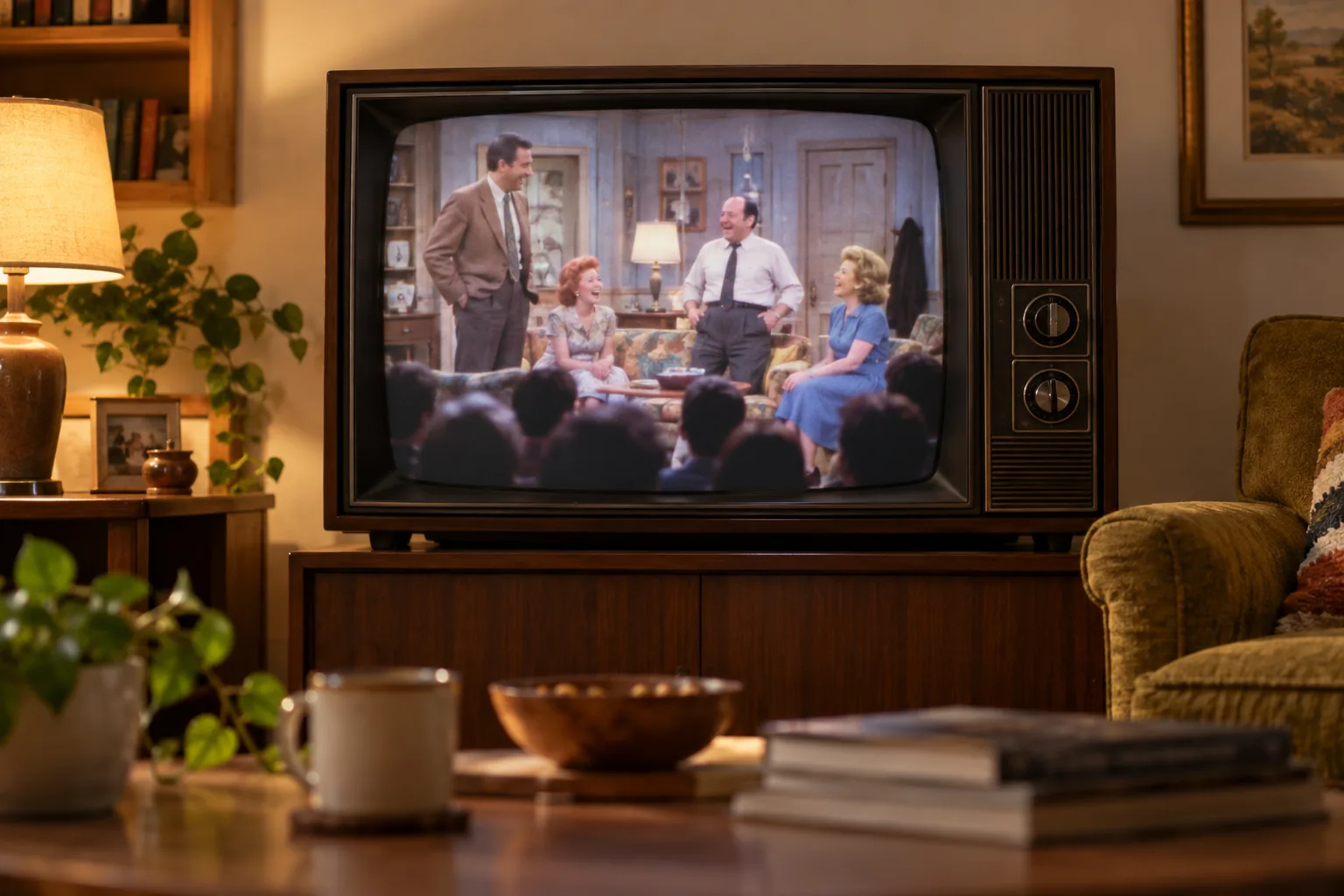
A laugh track fills in audience reaction
In a sitcom, a character makes a joke and a burst of laughter follows. Why add laughter when viewers cannot see an audience? A laugh track can shape the rhythm of a scene and signal a moment the show expects viewers to find funny.
The technique grew with television production
Early television comedy often borrowed the feel of live theater. But filming and editing could interrupt an audience’s response, and repeated takes made reactions inconsistent. Recorded laughter gave editors more control over where a laugh began and how long it lasted. PBS’s history of laugh tracks describes how the technique developed alongside television production.
Laughter can shape comedic timing
Laughter also creates a pause after a joke. That gives viewers a moment to understand the line before the next one begins. Without laughter, the same scene may feel drier or play at a different pace. When laughter is too loud or too frequent, however, it can feel as if the show is telling the audience when to laugh.
Can other people’s laughter change our reaction?
People can be influenced by others’ reactions. Recorded laughter may act as a social cue, and one study reported that laugh tracks could make some jokes seem funnier. That does not mean the effect is identical for every viewer or every scene. Taste, context, and how natural the laughter sounds all matter.
Shows choose different approaches today
Many modern shows use no laugh track. Some sitcoms are filmed in front of a live audience and keep those reactions; others use cinematic editing and let scenes play without audience laughter. Genre, direction, and the viewing experience all influence the choice.
Laughter also changes the spacing between lines. Editors may let a reaction run before the next line, while shows without laughter use silence or music to create a different rhythm.
The takeaway: Laugh tracks help set comedic timing and can provide a social cue. They grew from practical production needs, and their effect depends on the show and viewer.