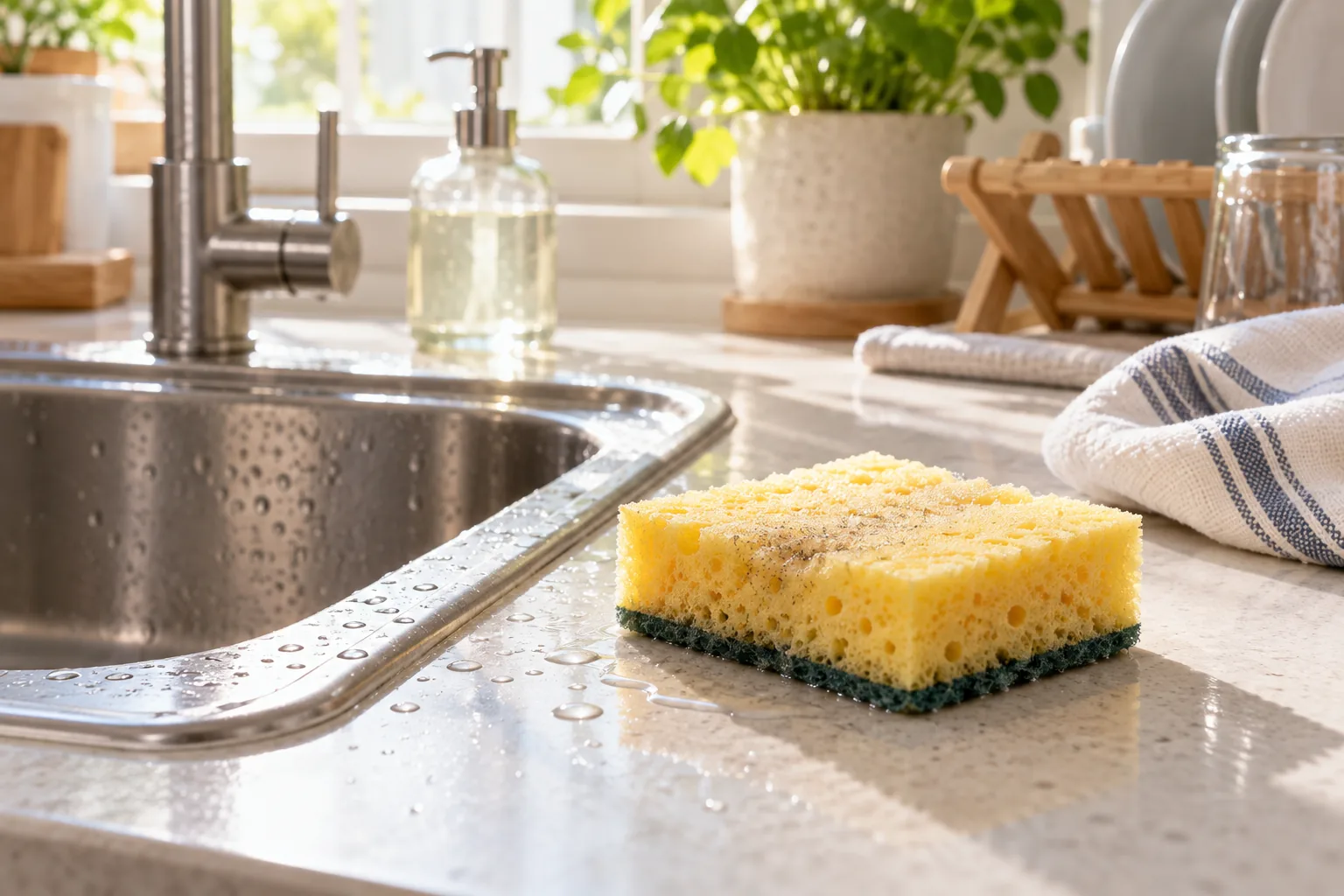
Sponges trap food and water
You rinse a kitchen sponge after washing dishes, but it smells musty again the next day. The reason is partly its job: a sponge collects food residue and holds water in small openings, where it can take time to dry.
Several things can contribute to odor
Grease and tiny food particles can remain after a quick rinse. If the sponge stays warm and damp, microbes may survive and grow. Research and public health guidance have examined ways to reduce bacteria in household sponges, because the material can retain both moisture and residue.
Let it dry between uses
Odor is not caused by one single “bad germ.” Food particles, grease, detergent residue, and slow drying can all contribute. Adding more strongly scented soap or briefly rinsing the surface may not clean material deep inside the sponge.
Follow the product’s sanitizing instructions
After use, remove visible food, rinse thoroughly, squeeze out excess water, and place the sponge on a holder that lets air reach both sides. Leaving it in a puddle or folded together with a dishcloth keeps it damp. Good kitchen ventilation also helps it dry.
Replace a sponge that stays smelly
Sanitizing methods depend on the sponge’s material and the manufacturer’s instructions. Microwave or dishwasher advice is common, but a sponge containing metal must never go in a microwave, and heating can be unsafe if the product or conditions are unsuitable. Follow the label. One sanitizing cycle also does not make a worn sponge new or guarantee that every microbe is gone.
Replace a sponge if it is torn, slimy, or keeps smelling after cleaning. After wiping raw meat or fish juices, clean the counter and sink separately and wash and dry the sponge carefully. Using separate tools for dishes, counters, and cutting boards can reduce cross-contamination.
The most useful routine is simple: remove food, rinse, squeeze, and let the sponge dry completely. Treat it as a replaceable kitchen tool and change it when its condition calls for it.
A wet sponge left in a closed container or a puddle may take longer to dry. Try a ventilated holder, let both sides air out, and replace it sooner if odor returns after cleaning.
The takeaway: Sponges can trap food and moisture in their openings, which helps odors develop. Rinse them well, dry them fully, and replace them when they remain smelly or damaged.