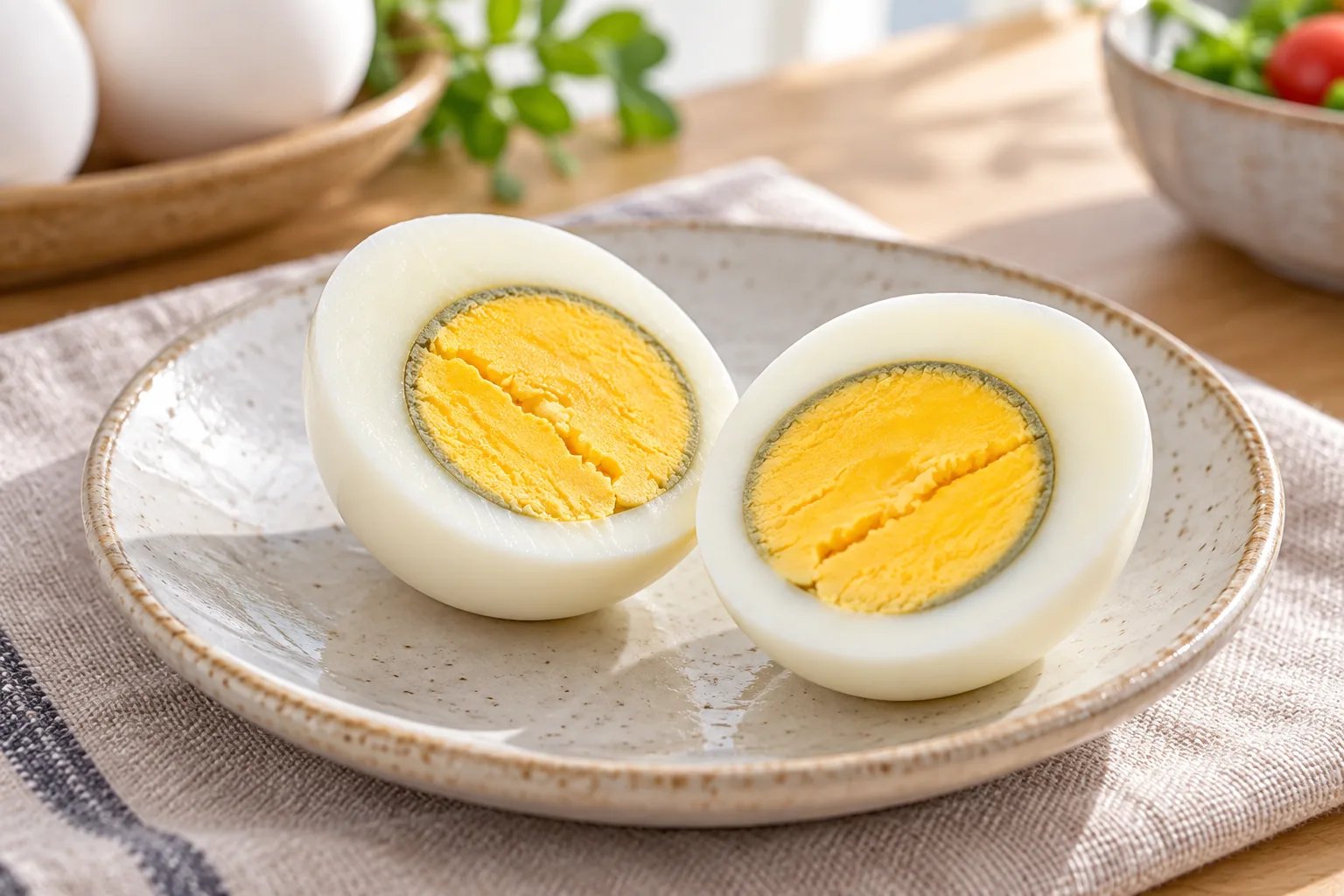
A reaction near the yolk’s surface
You cut into a hard-boiled egg and find a gray-green ring around the yolk. Is it spoiled? If the egg smells normal and the white looks fine, the color may simply reflect how long it was cooked.
Does green mean the egg is unsafe?
Egg whites contain sulfur compounds, while yolks contain iron. When an egg is heated for a long time, hydrogen sulfide from the white can react with iron near the yolk’s surface, forming iron sulfide. That reaction can look greenish or gray. The USDA Food Safety and Inspection Service notes that a green ring can form when eggs are overcooked.
How to reduce the ring
The ring by itself is generally an appearance change, not proof that an egg is unsafe. But color is only one clue. A cracked shell, poor storage, or leaving cooked eggs at room temperature for too long can raise food safety concerns. If an egg smells off or feels slimy, do not eat it.
Cooking preference and food safety are separate
To reduce the ring, avoid cooking eggs longer than needed and cool them promptly after cooking. Moving them into cold water stops residual heat from continuing to cook the center and can also make peeling easier. The ideal cooking time depends on egg size, starting temperature, the pot, and how firm you want the yolk.
Color alone is not the whole check
A fully cooked egg has a firm yolk; a shorter cook may leave the center soft. Rather than relying on one exact time for every kitchen, adjust for the egg and equipment. People at higher risk from foodborne illness—including pregnant people, young children, older adults, and those with weakened immune systems—should follow food safety guidance and avoid undercooked eggs.
So the green ring is usually a sign of heat exposure, not a sudden spoilage spot. Check storage and other signs too, then change the cooking time and cool the eggs promptly next time.
Separate a cooking-related color change from signs of spoilage. A cracked shell or extended room-temperature storage raises a different concern; refrigerate cooked eggs promptly and follow local food-safety guidance.
The starting temperature and number of eggs can change how quickly they cook. Avoid leaving them in hot water longer than needed; reducing the ring is about controlling heat, not cooking longer.
The takeaway: A green ring usually forms when sulfur compounds and iron react during prolonged cooking. The ring alone does not mean the egg is spoiled, but check storage, smell, and texture as well.