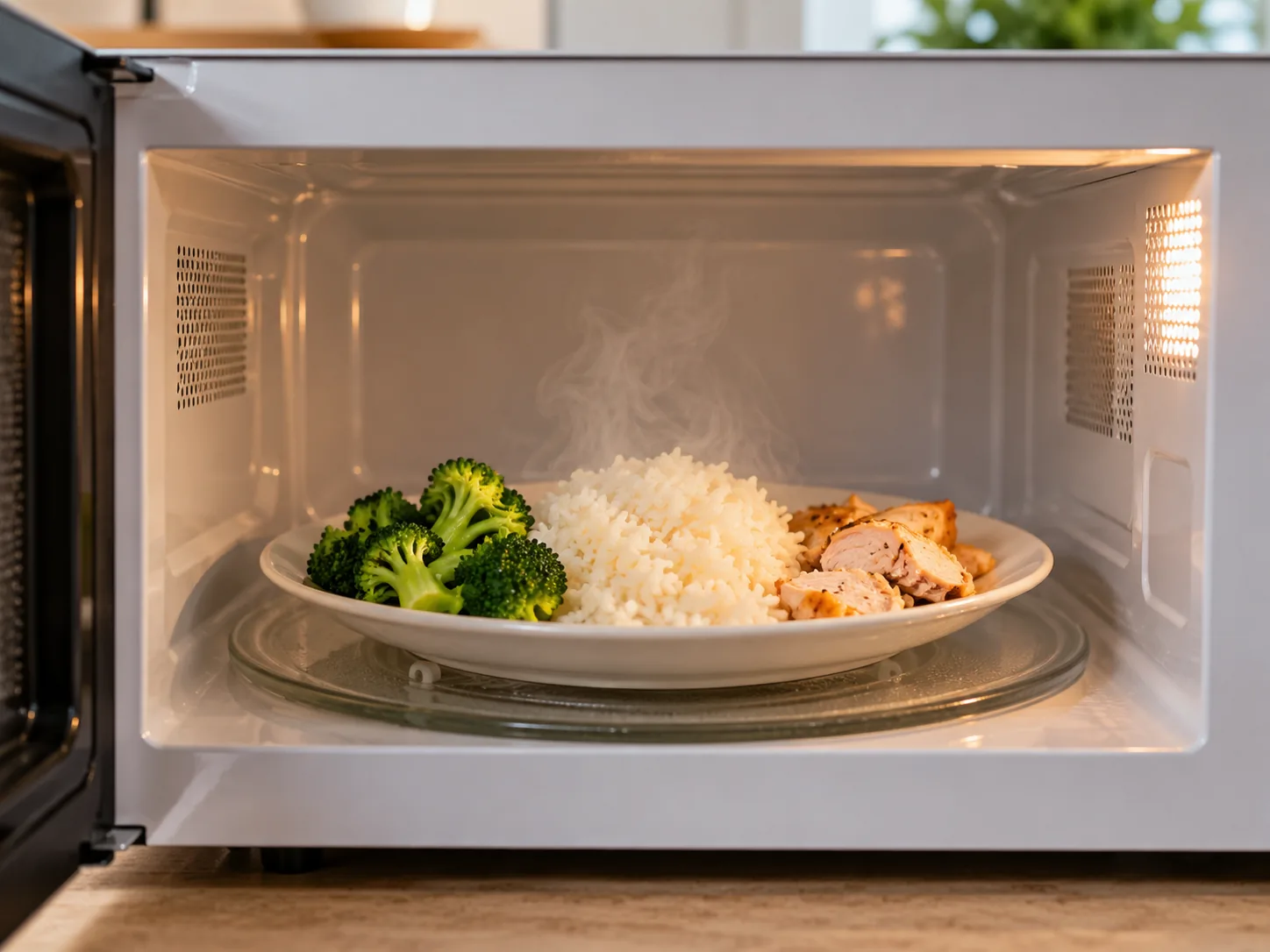
You reheat a bowl of rice, take one bite, and find it steaming hot. The next spoonful is barely warm. Even after another minute, the edges can be dry while a pocket in the middle stays cool. Usually, that does not mean your microwave is broken. It is a result of how microwave energy reaches food—and how heat then moves through it.
A microwave does not warm every part at once
Microwave energy is absorbed by parts of the food, including water molecules, and converted to heat. Different ingredients and shapes absorb energy differently. A moist section, a dry edge, a thin slice, and a thick piece in the same dish may not warm at the same rate.
The energy pattern inside a microwave can also vary from place to place. A turntable moves the food through different areas and can reduce unevenness, but it cannot make every bite heat identically. The U.S. Department of Agriculture recommends stirring, rotating, or turning food during microwave cooking to help even out heating and reduce cold spots. See the USDA’s microwave cooking guidance.
Shape and arrangement matter
A thick mound of rice or a large piece of meat takes longer for heat to reach the center than a thin layer. Spreading food out helps expose more of it to the energy. For some dishes, arranging food in a ring with a small space in the middle can help it warm more evenly.
For soups, stews, and mixed dishes, spread out the solid pieces and stir partway through. A microwave-safe cover helps retain moisture and can improve heating, but do not seal the dish airtight: steam needs a way to escape. Check that the container is labeled for microwave use. The FDA advises following the oven’s instructions for containers and keeping metal out unless the manufacturer specifically says it is safe. The FDA’s microwave oven guide has more on safe use.
Short bursts beat one long blast
Setting a long time at once can leave the edges overheated and dry before the center is warm. Heat in shorter intervals, check the food, and stir or turn it before continuing. That gives you more control, especially with a thick or large portion.
After the microwave stops, let the food stand briefly. Heat continues to spread from warmer areas into cooler ones. For leftovers, do not judge by the surface alone: stir where possible and check that the center is thoroughly hot. USDA guidance recommends covering and stirring or rotating leftovers during reheating. If food safety is a concern, use a food thermometer and follow official reheating guidance.
The container and the microwave matter too
Use glass, ceramic, or other containers marked as microwave-safe. Metal can reflect microwave energy and may cause problems, so follow the appliance manual. A container can feel hot even when the food inside is not evenly heated; the two temperatures are not the same thing.
Microwave wattage affects timing as well. A lower-powered oven may need more time than a recipe written for a higher-powered one. Make sure the turntable can rotate freely, and follow the appliance manual when adjusting cooking times.
Unevenly heated food is usually about several things working together: the energy pattern, the food’s ingredients and shape, where it sits, and how long heat has had to spread. Spread it out, cover it safely, stir or rotate partway through, and give it a short rest. That is often more useful than simply adding another long burst.