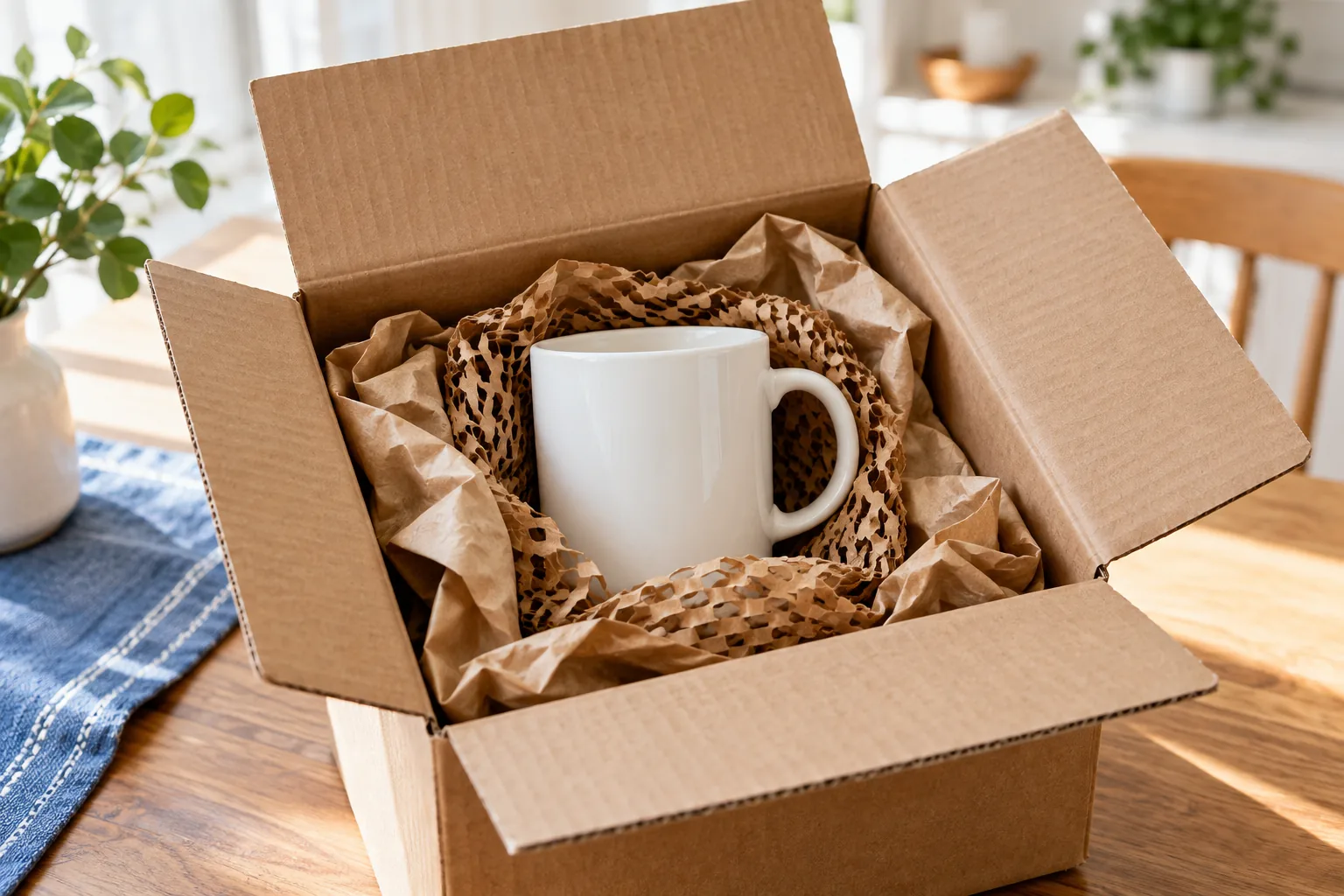
Free shipping is a welcome sight beside a shopping cart. A delivery charge added at the end can feel more annoying than the product price itself. But has the cost of getting the parcel to your home actually disappeared?
The box is still packed, transported and delivered. A zero in the checkout does not remove those steps. Start by asking who receives the free part of the offer.
Your checkout line is not the seller's cost
Free shipping generally means the buyer is not charged a separate delivery fee. It does not mean transportation or packaging costs nothing.
Shopify's shipping strategy guide explains that those costs need to be accounted for elsewhere, including the option of building part of them into product prices.
Consider two hypothetical shops: one sells an item for 20,000 won plus 3,000 won shipping; another charges 23,000 won with free shipping. For one item, both total 23,000 won. The labels differ, but your spending does not. These are illustrative prices, not actual listings.
Is the cost always hidden in the product price?
No. A seller may accept a smaller margin or treat shipping as a cost of attracting customers. The phrase alone does not reveal a shop's costs or profits.
Shopify's free-shipping guide discusses absorbing the expense as well as accounting for it in the product price. Different arrangements can produce different benefits for the buyer.
Free shipping is therefore not automatically a trick. If the product and conditions match and the final total is lower, it may be a good deal. The word free alone does not prove it is the cheapest one.
Why require a minimum purchase?
A minimum order can encourage a larger basket and give the seller more room to cover delivery. Products have different margins, so there is no reason every store would choose the same threshold.
Shopify's discount settings allow requirements such as a minimum purchase and eligible destinations. Check whether your specific order qualifies through the final checkout.
For you, the choice is whether to pay delivery for what you need or buy more to meet the threshold. The right answer depends on whether the additional item is useful.
Spending more to avoid a fee
In another hypothetical example, the item you need costs 20,000 won plus 3,000 won delivery, totaling 23,000 won. Adding a 7,000-won item to qualify for free shipping makes the total 27,000 won.
The delivery line disappears, but total spending rises by 4,000 won. Combining purchases can help if you already intended to buy that second item. An unwanted extra is a different matter.
Consider combining items already on your shopping list before looking for something new to fill the gap. Avoid building a stockpile that is difficult to store or use.
Compare the full cost on the same basis
Add the product price, the quantity you need and shipping. Check that package sizes and contents match. Delivery timing and return-shipping conditions can matter to your purchase too.
Finally, confirm the charge for your actual order. Some products or destinations may have different conditions. The checkout calculation tells you more than a prominent free-shipping banner.
So who pays?
The cost remains even when the buyer pays no separate fee. The seller may cover it through margins or product pricing, among other arrangements. Judge the deal by what you actually spend to receive the things you need, not by the word free.