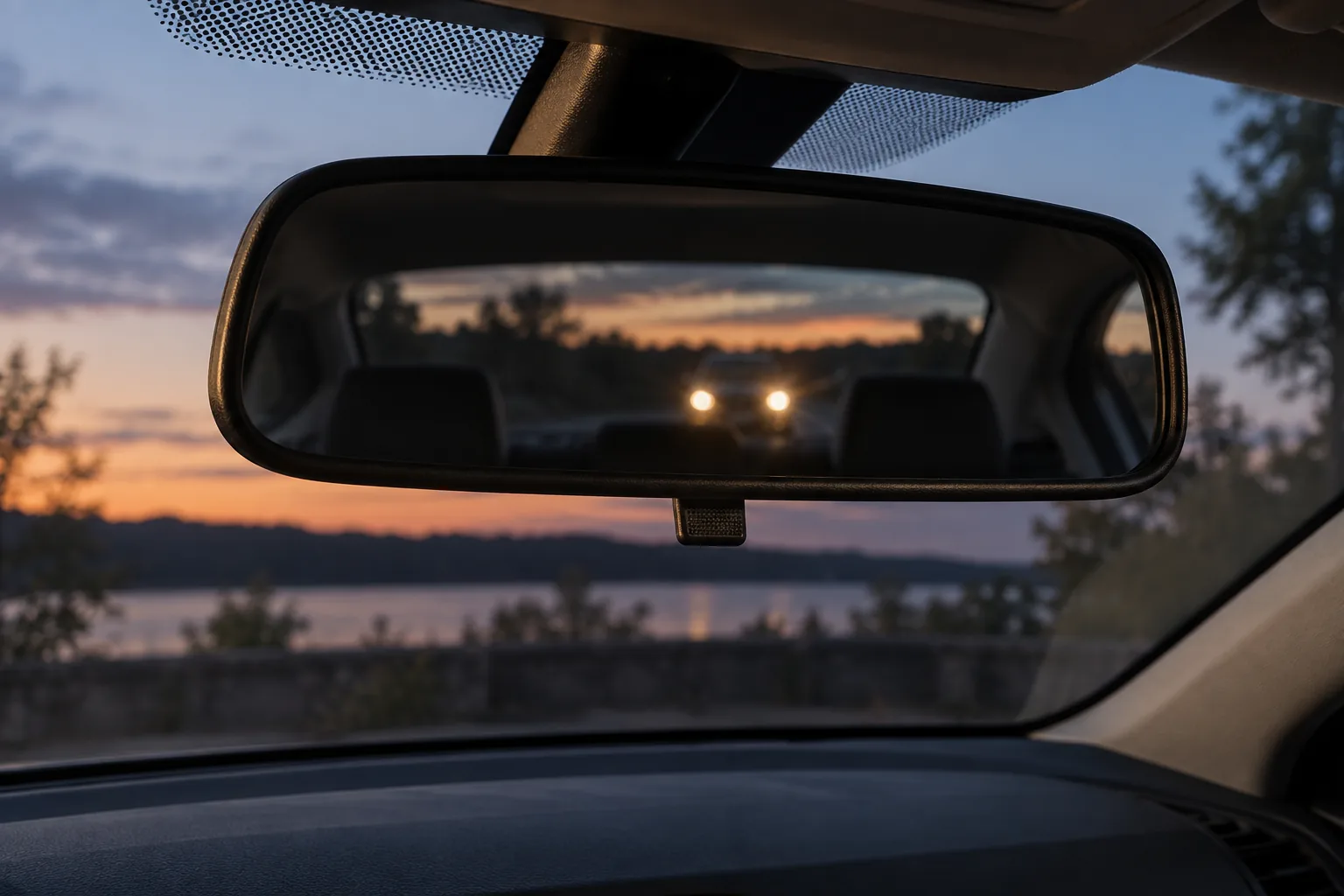
A manual mirror changes its angle
Headlights from a car behind you can make a rearview mirror uncomfortable at night. Pulling the small tab under a manual mirror makes the reflection look darker. The mirror usually is not simply absorbing the light; the tab changes the angle of the mirror so a weaker reflection reaches your eyes.
The weaker glass reflection remains visible
A typical day-night mirror uses a wedge-shaped piece of glass with a reflective coating on its back surface. In the daytime, the mirror is angled so the strong reflection from that coating reaches the driver. Moving the tab tilts the mirror. The bright reflection is redirected away, while a much weaker reflection from the front glass surface remains visible. The image becomes dimmer, but the glare is reduced.
Automatic mirrors dim electronically
The view may look faint or less sharp in night mode. That is expected: the mirror is using the weaker reflection. Returning the tab to its normal position restores the brighter reflection. It helps to learn the tab’s position before driving so you do not have to look away for long.
Sensors and adjustment affect performance
Some vehicles use automatic-dimming mirrors. Sensors detect bright light, and an electrochromic layer changes its tint to reduce the reflected brightness. NHTSA documents describe both manual and automatic rearview mirror designs. Sensor placement and operation vary by vehicle.
Glare reduction does not replace visibility
Automatic dimming can work less effectively if a sensor is blocked or if the mirror is not adjusted properly. A camera-based rearview display uses a screen rather than a conventional optical mirror and may have its own brightness controls. Check the owner’s manual to learn which type your vehicle has and how to operate it.
Night mode does not remove headlights completely and does not control light entering through side mirrors or the windshield. Adjust the side mirrors as well and maintain a safe following distance. You still need enough visibility to judge the position and distance of vehicles behind you.
If the rear view is too dark, check the mirror position and whether the glass is clean. Automatic dimming may be off or its sensor may be blocked; adjust mirrors while safely parked.
The takeaway: A manual night-mode mirror redirects the strong reflection and shows a weaker one. Automatic-dimming mirrors use sensors and electrochromic glass to reduce the reflected brightness.