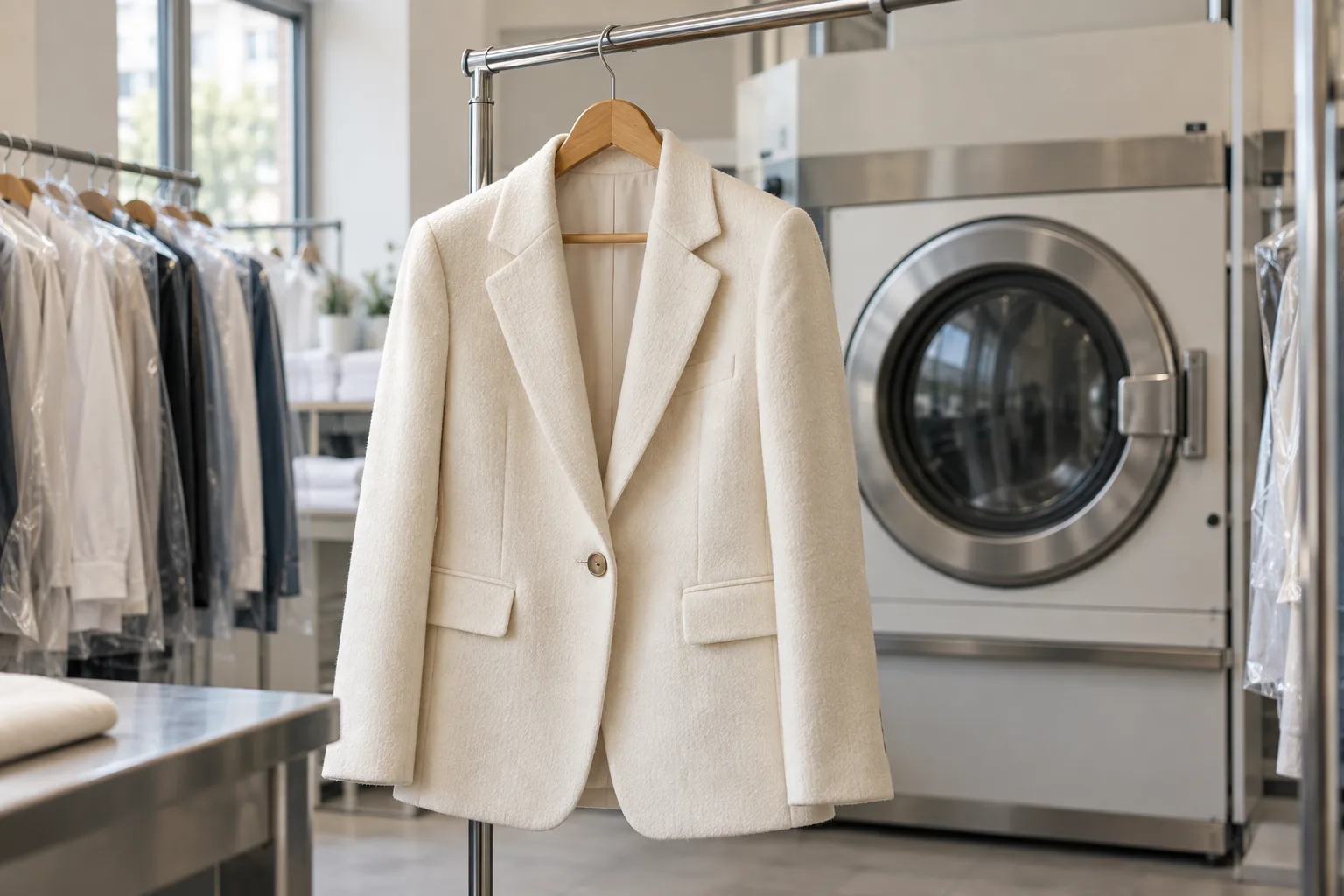
A coat's care label says dry clean. That sounds simple enough: no water, perhaps a little brushing or a blast of air. But how would that remove grease and other stains from the fabric?
The confusing word is dry. It does not mean that the garment stays dry throughout cleaning, or merely that it comes back dry. The name is mostly about the liquid used for the main cleaning stage.
The clothes are cleaned with liquid
Traditional dry cleaning uses a solvent other than water as its main cleaning liquid. Inside a machine, that solvent comes into contact with the fabric. Cleaning is followed by separating out contamination, recovering solvent and drying the garment. Despite the name, this is not a process of simply dusting off dry clothes.
A presentation submitted to an FTC public workshop describes dry cleaning as a commercial cleaning process using a solvent other than water. That distinction describes the method, rather than a particular shop.
Think about trying to wash an oily plate with plain water. Matching a cleaning liquid to the kind of soil can make removal easier. But stains differ, so choosing dry cleaning does not mean every mark will disappear automatically.
So is there absolutely no water involved?
Not using water as the main cleaning liquid is different from excluding every trace of water from every stage. Treating the name as a literal promise leads to another misunderstanding.
The FTC care-labeling rule notes that normal dry-cleaning processes may include moisture adjustment in the solvent and finishing with steam. Stain treatment before or after the main cleaning stage is another part of professional garment care.
A neatly pressed coat returned by a cleaner has been through more than one task. Separating the main cleaning bath from stain treatment and finishing makes the apparently contradictory name easier to understand.
Why do some clothes call for dry cleaning?
A finished garment can be more complicated than its outer fabric suggests. Linings, interlinings and decorations may respond differently to water, heat or agitation. A cleaning method that suits one component may not suit the assembled garment.
Read a care label as guidance for the finished item, rather than a simple claim that one fiber dislikes water. A dry-clean instruction does not necessarily mean a drop of water instantly destroys the garment. It also does not justify ignoring the label because a similar item survived a home wash.
If there is a stain, tell the cleaner what caused it and whether you have already treated it. Two brown marks can have different origins, even when they look alike.
Professional water-based cleaning exists too
Professional wet cleaning is a separate approach. An EPA information sheet describes using water and detergent for garments that would typically require dry cleaning.
That does not mean an ordinary home wash is interchangeable with the professional process. The garment, its care instructions and suitable finishing still matter. When in doubt, ask the cleaner to assess the actual item.
The answer: dry does not mean liquid-free
Dry cleaning uses a non-water solvent as its main cleaning liquid. It neither keeps the garment dry throughout cleaning nor promises that no water is used anywhere in the process. Think of it as professional cleaning with a different main liquid, and the name becomes much less mysterious.